 Skip to main content
Anxiety Therapy in Etobicoke & Online: Symptoms, Causes & Treatment
Your nervous system, doing too much.
Anxiety is the body's stress response running at the wrong volume — racing thoughts, tight chest, sleep that won't settle. This page covers what anxiety is, the most common symptoms, what triggers it, and how anxiety therapy actually helps. In person in Etobicoke or virtually across Ontario.
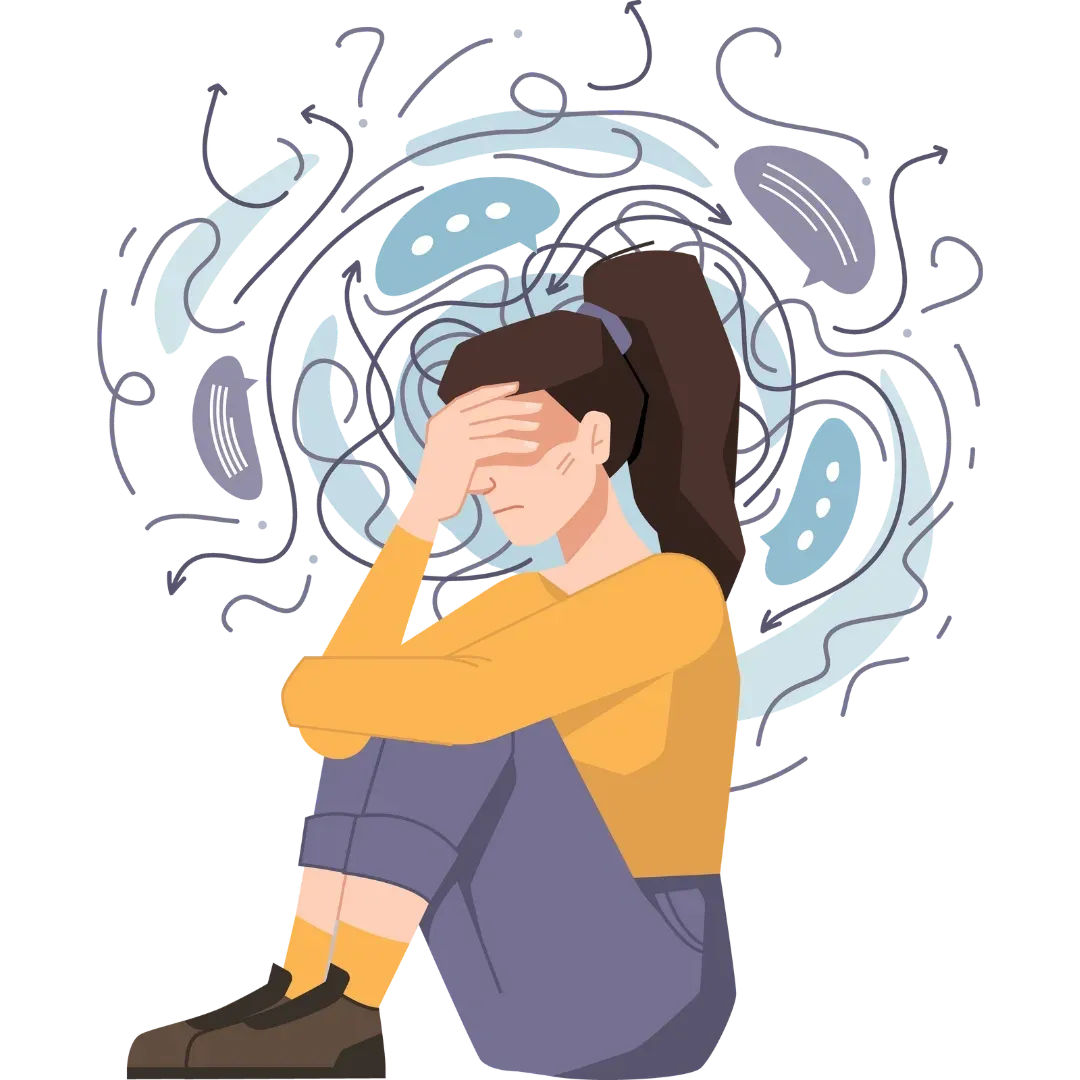
What is anxiety? Definition, types & how it shows up
Anxiety, in plain language.
Anxiety is your nervous system doing its job — flagging risk, scanning the environment, preparing you to act. The trouble starts when the alarm gets stuck on, when it fires for things that aren't actually threats, or when the volume drowns out the rest of your life.
Clinically, anxiety covers a wide range — generalized anxiety, social anxiety, panic, health anxiety, performance anxiety, and the kind that doesn't have a clean label but still keeps you up at 3 a.m. Most people who walk into therapy for anxiety aren't broken; they're tired of carrying it.
Therapy doesn't promise to switch the alarm off. It offers something more sustainable: understanding the specific shape of your anxiety, building tools that actually work for your wiring, and slowly turning down the volume so the rest of your life can come back into the room.
Anxiety symptoms: what to look for in body, mind & behaviour
How anxiety shows up.
Anxiety shows up in the body before it shows up in words. Some of the more common ways it surfaces:
- Racing or persistent worry Thoughts that loop, jump from one concern to the next, and don't quiet down even when you try to redirect them.
- Physical tension Tight chest, clenched jaw, shoulders held high, headaches, stomach issues, or a constant low-grade restlessness.
- Sleep difficulty Trouble falling asleep, waking at 3 a.m. with the mind already running, or sleeping poorly even when you're exhausted.
- Avoidance Skipping events, putting off tasks, or organizing your life around things you're trying not to feel.
- Panic-shaped episodes Sudden surges of fear, racing heart, shortness of breath, dizziness — sometimes without an obvious trigger.
- Difficulty concentrating Reading the same sentence three times, decisions that feel impossible, brain fog under pressure.
- Irritability or short fuse Snapping at people you love, lower tolerance for noise, mess, or anything unexpected.
- Constant anticipation Always preparing for the worst, hard time enjoying good moments because something might be coming.
Generalized anxiety, social anxiety, panic disorder & health anxiety
Different shapes of anxiety.
Clinicians break anxiety into several recognized patterns. Most people don't fit cleanly into one — but knowing the shape can help target the work. What most of them share is a habit of thought — the kind of negative thinking patterns therapy can catch and interrupt.
- Generalized Anxiety Disorder (GAD) Persistent, hard-to-control worry across multiple areas of life — work, health, relationships, the future. Lasts six months or more. The most common pattern.
- Social Anxiety Intense fear of being judged, embarrassed, or scrutinized in social or performance situations. Can lead to avoiding events, meetings, or public speaking entirely.
- Panic Disorder Recurring, unexpected panic attacks plus persistent worry about having more. Often comes with avoidance of situations where escape would be hard.
- Health Anxiety Preoccupation with having or developing a serious illness, often despite reassurance from doctors. Frequent symptom-checking, body-scanning, or medical reassurance-seeking.
- Performance Anxiety Specific to high-stakes situations — public speaking, exams, performances, important meetings. Body responds as if to threat even when intellectually you know it's fine.
- Anxiety with Depression The two often travel together. About half of people with an anxiety disorder also experience depression. Treatment usually addresses both at once.
What causes anxiety? Common triggers & risk factors
Where it comes from.
There's rarely a single cause. Anxiety usually develops at the intersection of biology, history, and current circumstance. Knowing your specific mix helps target what to work on.
- Genetic predisposition Anxiety runs in families. Having a close relative with an anxiety disorder roughly doubles your risk — though genetics is influence, not destiny.
- Nervous system wiring from early experiences Childhood environments shape how the body's threat-response calibrates. Chronic instability, neglect, or unpredictable caregivers can leave the alarm set higher.
- Ongoing stressors Work pressure, financial strain, relationship conflict, caregiving load, immigration adjustment — sustained stress without recovery cycles tips into clinical anxiety.
- Trauma history Single-incident or complex trauma rewires the threat-response. Anxiety after trauma is the body trying to keep you safe based on what already happened.
- Sleep & substance patterns Chronic sleep deprivation amplifies anxiety. So does heavy caffeine, alcohol use, and certain recreational substances. These are often part of the loop.
- Cultural & family expectations The pressure to keep it together, succeed visibly, support extended family, or hold a particular identity — these are real anxiety drivers, especially in immigrant and second-generation experience.
Anxiety treatment: how therapy helps (CBT, ACT, mindfulness)
Why work with a therapist.
There's no single right approach for anxiety, but the consistent finding across the research is that the right combination of therapy and a steady relationship with your therapist outperforms most quick fixes. A few of the things therapy can offer:
- 01
Understanding your specific shape of anxiety
Generalized worry, social anxiety, panic, and health anxiety all benefit from different tools. Therapy starts by figuring out what's actually pulling on you, before prescribing what to do about it.
- 02
Evidence-based skill building (CBT, ACT, mindfulness)
CBT, ACT, and mindfulness-based approaches each have strong research support for anxiety. Skills like cognitive reframing, exposure work, and somatic regulation are taught and practiced — not just discussed.
- 03
A nervous system that gets to settle
A weekly hour where you don't have to perform, explain, or solve gives the body something it rarely gets — a regular cue that it's safe to come down a notch.
- 04
Pattern recognition over time
Anxiety often hides its triggers in plain sight. Therapy gives you a structured way to notice the small recurring shifts so you can intervene earlier.
- 05
Cultural fluency, not cultural translation
Our team brings deep familiarity with South Asian and multicultural family dynamics, immigrant experience, and identity work — so you're not spending your session educating your therapist.
Ready to work on this with a therapist?
Individual Therapy for anxiety.
Therapy for anxiety is delivered through our individual therapy service — in person at our Etobicoke clinic or by secure video anywhere in Ontario.
When to seek therapy for anxiety
Signs it's time to get support.
Everyone has worry. The line between "normal" and "worth getting help for" is more about pattern and impact than intensity. Consider therapy if any of the following has been true for two weeks or more:
- It's affecting your sleep, work, or relationships You're missing deadlines, snapping at people you love, or losing hours of sleep to thought loops you can't slow down.
- You're avoiding things you want to do Skipping events, declining opportunities, or organizing your day around what you're trying not to feel.
- The strategies that used to work, don't anymore Exercise, sleep, time with friends — the usual reset doesn't reset things this time.
- You've had a panic attack Even one. Especially if it's left you anxious about having another. The earlier you understand what's happening, the easier it is to interrupt the loop.
- Family or friends have noticed Often the people around us see it before we do. If someone you trust has gently said something, that's worth taking seriously.
- You're using substances to manage it Alcohol, weed, or other substances to take the edge off — especially more than usual. The relief is real and short, the loop is real and long.
For practical tools you can try before or alongside therapy, our blog has a few starting points: how to cope with stress, journaling prompts for anxious thoughts, and CBT vs DBT (which approach fits when).
Anxiety FAQ: common questions answered
What people ask first.
What is anxiety, exactly?
Anxiety is the body's stress response — racing heart, shallow breathing, scanning thoughts — turned on at the wrong volume or in the wrong context. It's a normal mechanism that's become unhelpful. The clinical line between everyday worry and an anxiety disorder is roughly: persistent for six months or more, hard to control, and interfering with work, relationships, or sleep.
What causes anxiety?
There's no single cause — anxiety usually comes from a mix of factors: genetic predisposition (anxiety runs in families), nervous system wiring shaped by early experiences, ongoing stressors (work, relationships, finances, health), trauma history, sleep and substance patterns, and cultural or family expectations that don't fit. For most people it's the combination, not any single trigger, that tips into clinical anxiety.
What's the difference between anxiety and a panic attack?
Anxiety tends to be lower-grade and longer-lasting — persistent worry, tension, dread that builds over hours or days. A panic attack is a sudden, intense surge — racing heart, chest tightness, shortness of breath, dizziness, sometimes a sense of unreality — that peaks within about 10 minutes and usually subsides within 30. You can have anxiety without panic attacks, panic attacks without ongoing anxiety, or both together.
Is a panic attack dangerous?
Deeply unpleasant, but not physically dangerous. Even though it often feels like a heart attack or like you can't breathe, the body is doing a normal stress response at high intensity. If it's your first one, please get checked by a doctor to rule out other causes. After that, the work is about understanding what's triggering them and learning the body cues that let you intervene earlier.
What kind of therapy is best for anxiety?
The research-backed front-runners are Cognitive Behavioural Therapy (CBT), Acceptance and Commitment Therapy (ACT), and Mindfulness-Based Cognitive Therapy. For panic and phobias specifically, exposure therapy has the strongest evidence. We're integrative — the right approach depends on which part of anxiety is loudest for you. Most clients work with a combination tailored over time.
Is anxiety curable?
"Cured" isn't quite the right word — anxiety is a built-in mechanism, not a disease. But the level of distress, frequency of episodes, and impact on your daily life can shift dramatically with therapy. Many clients report that anxiety becomes manageable background noise rather than the loudest signal in the room. Some find it goes quiet enough they barely notice it. The goal is functional, not perfect.
Will therapy alone work, or do I need medication?
For mild-to-moderate anxiety, therapy alone often works well. For severe anxiety, panic disorder, or anxiety with depression, the combination of therapy plus medication has the strongest outcomes. We don't prescribe — that's a physician's role — but we can coordinate with your family doctor if that conversation makes sense.
How long does anxiety treatment take?
Most clients notice some shift in 4–8 sessions — usually small things first, like sleeping a bit better or catching a thought spiral earlier. Substantial change typically takes 3–6 months of consistent work. We re-evaluate every few months, and you're never locked in.
What does the first session actually look like?
It's a conversation. We'll talk about what brought you in, what you've already tried, what your day-to-day looks like, and what you want to be different. No homework, no exposure work, no diving into your childhood unless that's where the answer lives. The first session is mostly about getting oriented together.
Do you offer virtual sessions for anxiety?
Yes — PHIPA-compliant video sessions across Ontario. Many anxiety clients find virtual sessions easier, especially in the early weeks when leaving the house is part of the problem.
Is anxiety therapy covered by OHIP?
No. Psychotherapy provided by Registered Psychotherapists (RP) and Registered Social Workers (RSW) isn't covered by OHIP. It is, however, covered by most extended health benefit plans — look for psychotherapist, registered social worker, or mental health coverage in your benefits booklet.
Anxiety help & free resources in Canada
External support to lean on.
-
Anxiety Canada
A leading non-profit with self-help tools, the MindShift app, and clear plain-language explanations of every anxiety subtype.
-
CAMH — Centre for Addiction and Mental Health
Canada's leading mental health teaching hospital. Their anxiety resource page is plain-language and clinically reviewed.
-
Wellness Together Canada
Free, government-funded mental health support — 24/7 phone counselling and online tools, including for anxiety.
-
ConnexOntario
Free, confidential 24/7 information line for mental health and addictions support across Ontario. Call 1-866-531-2600.
Related conditions therapy helps with
Other things therapy helps with.
Ready when you are
Take the first step toward feeling like yourself again.
Book a free 15-minute consultation. No paperwork, no commitment — just a conversation about what you're going through and whether we're a fit.