 Skip to main content
Relationship Dynamics Therapy in Etobicoke & Online: Attachment Styles & Patterns
The patterns running in the background.
Relationship dynamics aren't just about your current partner — they're the whole architecture of how you love, fight, repair, and trust. This page covers attachment styles, common relationship patterns, signs of toxic dynamics, and how therapy actually helps. In person in Etobicoke or virtually across Ontario.
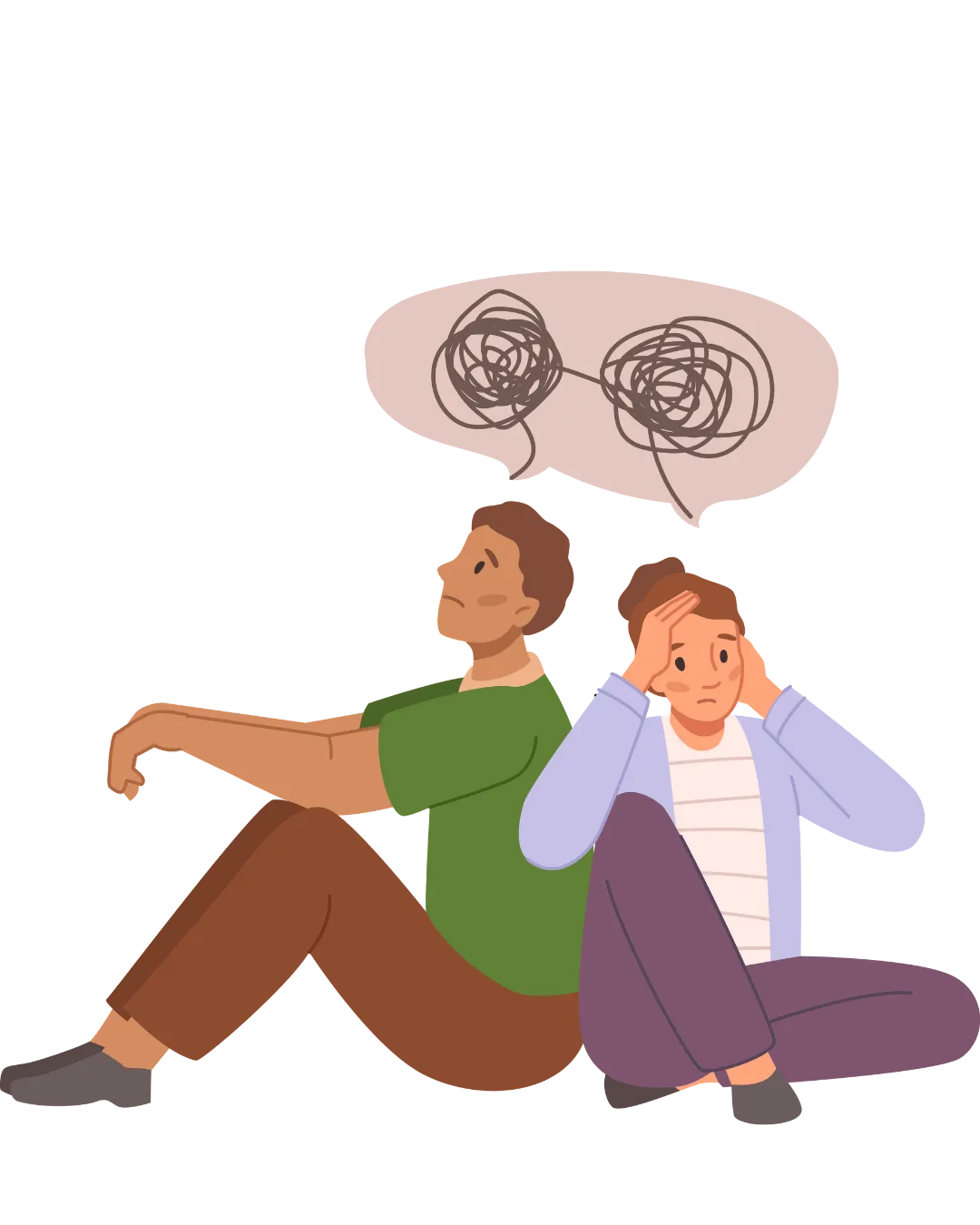
What are relationship dynamics? And what shapes them?
Relationship dynamics, in plain language.
Relationship dynamics aren't just about your current partner. They're the whole architecture of how you love, fight, repair, withdraw, ask, and trust — built from your earliest relationships and refined by every relationship since. Most of it runs in the background until something asks it to run differently.
Therapy for relationship dynamics can be one-on-one (working on your patterns and history individually) or with a partner (working on the relationship itself). This page focuses on the individual side — the work of understanding your own patterns. For joint work with a partner, see our couples therapy page.
What this work isn't: assigning blame, fixing the other person, or running a relationship through a process to optimize it. What it is: getting clear on your part of the pattern, what your nervous system has learned to do under closeness and conflict, and what would actually help you show up the way you want to.
Relationship problems: signs the dynamic isn't working
How dynamics show up.
Relationship dynamic struggles often show up across multiple relationships, not just one. Some of the more common signs:
- Recurring patterns across partners The same dynamics — the same fights, the same imbalances, the same disappointments — keep showing up with different people.
- Difficulty with closeness or distance Either pulling away when things get close, or anxiously over-pursuing when there's any space. Both are nervous-system patterns.
- Communication breakdowns Hard time expressing what you need, hard time hearing what's being asked, or arguments that escalate before they can be discussed.
- Resentment that builds quietly An accumulating sense of being uncared for, unseen, or doing more than your share — that you didn't name in time.
- Loss of trust After a rupture (broken agreement, infidelity, or repeated small betrayals), an inability to settle back into safety even when things look fine on the surface.
- People-pleasing or self-erasure Saying yes when you mean no, prioritizing your partner's needs at consistent cost to your own, losing track of what you actually want.
- Difficulty being alone Anxiety, restlessness, or low mood when not in a relationship. Sense of not being whole without a partner.
- Insecurity that doesn't match the relationship Persistent worry about being left, replaced, or not being enough — even when there's no real evidence of it in the current relationship.
Attachment styles: anxious, avoidant, secure & disorganized
The patterns you bring to closeness.
Attachment styles describe how you tend to function in close relationships — particularly under stress. They were originally developed in research by John Bowlby and Mary Ainsworth, and they remain one of the most clinically useful frameworks for understanding relationship dynamics. The four main adult patterns:
- Secure attachment Comfortable with both closeness and autonomy. Can ask for what you need, tolerate temporary disconnection without panic, repair after conflict, and offer support without losing yourself. The goal — but a learned capacity, not a personality type.
- Anxious attachment (preoccupied) Strong need for closeness, paired with persistent worry about being abandoned, replaced, or not loved enough. Monitors mood closely. Seeks reassurance. Destabilized by small ruptures. The fear is often louder than the relationship's actual reality.
- Avoidant attachment (dismissive) Learned discomfort with closeness and emotional dependency. Pulls away when things get serious. Values independence protectively. Struggles to express vulnerability. Shuts down emotionally during conflict. Not "not caring" — a nervous-system pattern that developed to keep you safe.
- Disorganized attachment (fearful-avoidant) Often develops from trauma or unpredictable caregiving. Wants closeness and fears it at the same time. The pursue-withdraw pattern can flip within hours. Often co-occurs with PTSD or complex trauma. Treatable, but takes specific trauma-informed work.
- Earned secure attachment The version of secure attachment that's developed in adulthood through stable, healing relationships (often including therapy) and consistent practice with new patterns. Evidence shows it's a real and durable shift — not just a re-labeling.
- How attachment shows up in conflict Anxious patterns tend to pursue, escalate, and seek connection through conflict. Avoidant patterns tend to withdraw, stonewall, or shut down. Many couples are an anxious–avoidant pairing — which is hard to navigate without naming the pattern.
Signs of a toxic relationship vs a healthy one
How to tell the difference.
"Toxic" is overused, and "healthy" is hard to define from inside the relationship. A few clearer markers — research-backed where possible.
- Healthy: repair after conflict Couples in healthy relationships still fight. What's different is they make and accept repair attempts — small bids to lower the temperature, apologize, reconnect. Gottman's research finds this is one of the strongest predictors of relationship longevity.
- Toxic: contempt Eye-rolling, sarcasm, mockery, character attacks. Gottman calls contempt the single biggest predictor of divorce. It's distinct from anger or criticism — contempt is dismissal of the other person's worth.
- Healthy: autonomy + closeness can both exist Both people can pursue their own interests, friendships, and growth without it being a threat. Closeness isn't dependent on merger; autonomy isn't dependent on distance.
- Toxic: controlling behaviour Control over finances, social contact, decisions, or time. Often gradual and rationalized. Often paired with isolation from friends and family. A serious red flag, especially if it's escalating.
- Healthy: honest communication, even when it's hard Difficult conversations happen, with effort to be honest about how you feel and curious about how your partner feels. Mistakes get named and worked through, not buried.
- Toxic: gaslighting or persistent dishonesty Patterns of denying your reality, rewriting events, lying about important things, or making you doubt your own perception. Erodes the basic trust a relationship rests on.
- Healthy: support for each other's growth The relationship makes both people more themselves over time, not less. New interests, friendships, ambitions are met with curiosity rather than threat.
- Toxic: any pattern of violence or intimidation Physical violence, threats, throwing or breaking things, intimidation. The relationship has crossed a line that can't be worked through in standard couples therapy without first addressing safety. If this is your situation, please call the Assaulted Women's Helpline at 1-866-863-0511 or visit endingviolencecanada.org.
How therapy helps with relationship patterns (attachment work, CBT, IFS)
Why work with a therapist.
Relationship dynamics therapy is structured work on the patterns underneath the relationships, not on the surface conflicts. A few of the things therapy can offer:
- 01
A clear map of your attachment patterns
Most relationship struggles trace back to attachment — how your earliest caregivers responded to your needs. Therapy helps you see your specific pattern and how it's playing out now, without pathologizing it.
- 02
Communication skills that actually work under stress
It's easy to communicate well when nothing's at stake. Therapy is a structured space to practice — and learn — communication that holds up when you're activated.
- 03
Boundary work, the actual kind
Boundaries aren't ultimatums or walls. They're a clear sense of what you'll do and what you won't, communicated calmly. That's a skill, and it can be learned.
- 04
Rebuilding trust — in relationships or in yourself
After ruptures, trust takes structured work to rebuild. Whether you're staying in a relationship after a betrayal or learning to trust your own judgement again after a difficult one, therapy provides the scaffolding.
- 05
Cultural fluency, not cultural translation
Family dynamics, intergenerational expectations, arranged-marriage contexts, and intercultural relationships have specific shapes our team is fluent in — especially within South Asian and multicultural family systems.
Ready to work on this with a therapist?
Individual Therapy for relationship dynamics.
Therapy for relationship dynamics is delivered through our individual therapy service — in person at our Etobicoke clinic or by secure video anywhere in Ontario.
When to seek therapy for relationship patterns
Signs it's time to get support.
You don't need to be in a relationship crisis to benefit from this work. The most useful time is often before the patterns have done their full damage. Consider therapy if any of the following has been true for a while:
- The same dynamic keeps appearing across relationships Different people, same fights. Different partners, same imbalances. That's a strong signal the pattern lives in you, not just in the relationships.
- You feel like a different person in this relationship Quieter than you used to be. More anxious. More withdrawn. More angry. The version of you in the relationship doesn't quite match the version you want to be.
- You're trying to manage someone else's nervous system Tracking their mood, walking on eggshells, smoothing over what might set them off. That much vigilance is exhausting, and it's worth understanding why you do it.
- Trust has been broken Whether you're staying or leaving, rebuilding trust — in the partner or in yourself — takes structured work. Therapy provides the scaffolding for that work.
- You can't decide whether to stay or leave Indecision is often a sign the work needs to happen at a deeper layer than the surface decision. Therapy can help you get clear enough to choose with grounding.
- You want to stop repeating your parents' relationship Or your previous relationships'. Or a pattern you watched and swore you wouldn't do. Therapy is one of the most direct paths to choosing differently.
For a partner-focused starting point, see our blog on improving communication in a long-term relationship, or — if a betrayal is part of the picture — rebuilding trust after infidelity. For joint work with a partner, see our couples therapy page.
Relationship dynamics FAQ: common questions answered
What people ask first.
What are attachment styles?
Attachment styles describe the patterns by which people connect, particularly under stress. Developed in research by John Bowlby and Mary Ainsworth, the four main adult patterns are secure, anxious (preoccupied), avoidant (dismissive), and disorganized (fearful-avoidant). They're shaped by early caregiver relationships and tend to persist into adult romantic and close relationships — though they can shift with awareness and work.
What is anxious attachment?
Anxious attachment (sometimes called "preoccupied") involves a strong need for closeness paired with persistent worry about being abandoned, replaced, or not loved enough. It often looks like: monitoring your partner's mood closely, over-texting or seeking reassurance, struggling with space, and feeling deeply destabilized by small ruptures. It's a learned pattern, not a character flaw.
What is avoidant attachment?
Avoidant attachment (sometimes called "dismissive") involves a learned discomfort with closeness and emotional dependency. It often looks like: pulling away when things get serious, valuing independence in a way that feels protective, struggling to express vulnerability, and shutting down emotionally during conflict. It's a nervous-system pattern that developed to keep someone safe, not a sign of not caring.
What is secure attachment?
Secure attachment is the baseline of being comfortable with both closeness and autonomy. People with secure attachment can ask for what they need, tolerate temporary disconnection without panic, repair after conflict, and offer support without losing themselves. It's the goal of attachment-focused therapy — not as a personality type, but as a learned capacity that anyone can develop over time.
Can attachment styles change?
Yes — though they're deeply grooved and the change is gradual. Research on "earned secure attachment" shows that adults with insecure attachment styles can develop secure functioning through stable, healing relationships (including therapy) and consistent practice with new patterns. It usually takes months to years of intentional work.
What are signs of a toxic relationship?
Common signs: ongoing contempt or disrespect, controlling behaviour (financial, social, emotional), repeated dishonesty or gaslighting, isolation from friends and family, walking on eggshells, any pattern of intimidation or violence, and a baseline sense that the relationship is eroding you rather than supporting you. "Toxic" is overused — the real question is whether the relationship can change with effort from both people, or whether it's structurally unsafe.
What is a healthy relationship?
A healthy relationship has: mutual respect (no contempt), repair after conflict (not perfection — repair), capacity to hold both autonomy and closeness, honest communication, support for each other's growth, and a baseline sense of safety. It doesn't mean no conflict — research is clear that healthy relationships fight; they just fight differently and repair afterward.
How can therapy help me improve communication in relationships?
Therapy gives you structured practice in: naming what you actually feel (often harder than it sounds), expressing needs without escalation, hearing what's being said without immediately defending, and repair after conflict. These are learnable skills, and the therapy room is a low-stakes place to practice.
Can therapy fix a toxic relationship?
Therapy can't fix something one person isn't willing to work on. What individual therapy can do is help you see the dynamic clearly, understand your part in it, and decide — with more grounding — whether to stay and rebuild, set firmer terms, or leave. We don't take a position on the outcome; we support the clarity.
What are the signs that I should leave a relationship?
Therapy doesn't prescribe leaving or staying. What it can do is help you get honest about: whether your needs are negotiable in this relationship, whether your partner is willing to engage in change, whether the patterns are eroding you, and whether the version of you in the relationship is the version you want to be. The decision stays yours.
Should I do individual therapy or couples therapy?
It depends. Individual therapy helps if you want to work on your own patterns, your attachment history, or get clear on a decision. Couples therapy helps if you and a partner want to work on the relationship together. Often both are useful — individual work supports the joint work and vice versa. The free consult is a low-stakes way to talk through which fits.
Can I do this online?
Yes. We offer PHIPA-compliant video sessions across Ontario. Attachment and relationship pattern work translates well to virtual sessions.
Is relationship therapy covered by OHIP?
No. Psychotherapy provided by Registered Psychotherapists (RP) and Registered Social Workers (RSW) isn't covered by OHIP. It is, however, covered by most extended health benefit plans — look for psychotherapist, registered social worker, or mental health coverage in your benefits booklet.
Relationship support & free resources
External support to lean on.
-
The Gottman Institute
Decades of research on what makes relationships work. Free articles, books, and self-assessment tools.
-
Attachment Project
Plain-language education on attachment styles and how they shape adult relationships, with free quizzes and resources.
-
Wellness Together Canada
Free, government-funded mental health support — 24/7 phone counselling and online tools, including for relationship distress.
-
ConnexOntario
Free, confidential 24/7 information line for mental health and addictions support across Ontario. Call 1-866-531-2600.
Related areas therapy helps with
Other things therapy helps with.
Ready when you are
Take the first step toward feeling like yourself again.
Book a free 15-minute consultation. No paperwork, no commitment — just a conversation about what you're going through and whether we're a fit.