 Skip to main content
Trauma Therapy in Etobicoke & Online: PTSD Symptoms, Treatment & Recovery
When the past keeps reaching into the present.
Trauma is what happens inside us when something overwhelms our capacity to make sense of it. This page covers what trauma is, the most common symptoms, the difference between trauma and PTSD, and how trauma therapy actually helps. In person in Etobicoke or virtually across Ontario.
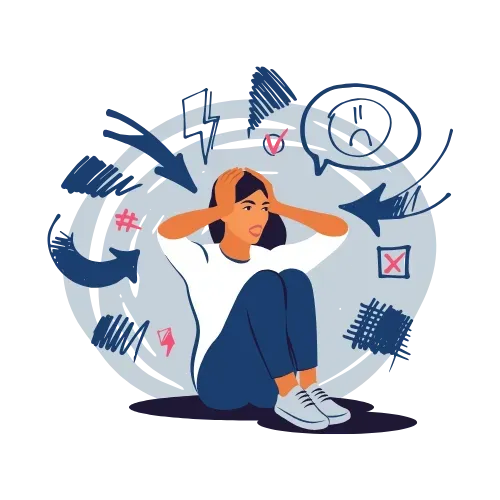
What is trauma? Definition, types & how it shows up
Trauma, in plain language.
Trauma is what happens inside us when something overwhelms our capacity to make sense of it. It can come from a single event — an accident, an assault, a sudden loss — or from a long pattern of relational injury, neglect, or unsafety, often beginning in childhood.
What makes it trauma isn't the size of the event from the outside. It's the imprint it left on the nervous system. That imprint can stay quiet for years and then surface unexpectedly: in panic, in difficulty trusting, in numbness, in a hyper-alert relationship with the world.
Trauma therapy is not about reliving what happened. Modern trauma work is paced, consent-based, and oriented toward helping the body and mind finally process what they couldn't process at the time. The goal is not to forget — it's to remember without the past pulling you under.
Trauma & PTSD symptoms: signs in body, mind & relationships
How trauma shows up.
Trauma shows up across the body, the relationships, and the inner life. Some of the more common signs:
- Hypervigilance An ongoing sense of needing to scan for danger. Easily startled, can't fully relax, always checking exits or threats.
- Intrusive memories or flashbacks Images, sensations, or fragments of the past surfacing unbidden — sometimes triggered by something small and seemingly unrelated.
- Emotional numbness or disconnection Feeling far away from your body, your feelings, or the people around you. Things that should feel meaningful don't land.
- Sleep disturbance Difficulty falling asleep, nightmares, waking up exhausted, or sleeping fitfully even when safe.
- Avoidance Steering clear of places, conversations, or relationships that feel adjacent to the original experience.
- Difficulty trusting In intimate relationships, with authority, or with your own body and judgement.
- Persistent shame or self-blame An internal sense that you should have done something differently, or that what happened reflects something about you.
- Body-based symptoms Chronic tension, unexplained pain, autoimmune flares, digestive issues, or a baseline sense of being unsafe in your own skin.
Single-incident trauma, complex PTSD, childhood trauma & collective trauma
Different shapes of trauma.
Clinicians distinguish several patterns of trauma. Most people don't fit cleanly into one — but knowing the shape helps target the work and choose the right approach.
- Acute trauma (single-incident) From one overwhelming event — an accident, assault, natural disaster, sudden loss. Usually responds well to focused trauma-processing approaches like EMDR.
- Chronic trauma From prolonged exposure to a stressful situation — domestic violence, ongoing illness, persistent unsafety. Treatment is longer and emphasizes safety-building first.
- Complex PTSD (C-PTSD) From prolonged, repeated trauma in contexts where escape was difficult — usually relational, often starting in childhood. Includes emotion regulation difficulties, self-concept issues, and relational impact.
- Childhood trauma Abuse, neglect, witnessing violence, early loss, parental mental illness or addiction. Shapes nervous-system development and adult relationship patterns. Many people seek therapy decades later.
- Intergenerational trauma Trauma transmitted across generations — through parenting patterns, cultural rupture, immigration, historical violence. Common in immigrant, refugee, and historically oppressed communities.
- Vicarious / secondary trauma From repeatedly witnessing or hearing about others' trauma — common in healthcare workers, first responders, social workers, journalists, and family members of survivors.
Trauma treatment: how therapy helps (EMDR, somatic, IFS, TF-CBT)
Why work with a trauma-trained therapist.
Trauma therapy is specialized work. Some general talk therapy approaches can re-traumatize; trauma-informed work is paced and structured differently. A few of the things this kind of therapy can offer:
- 01
A trauma-informed pace
We don't dive in. Early sessions focus on safety, stabilization, and building the resources you'll need before any deeper memory work happens. The pace is yours.
- 02
Evidence-based trauma modalities (EMDR, somatic, IFS, TF-CBT)
Approaches like EMDR, somatic experiencing, IFS (internal family systems / parts work), and trauma-focused CBT all have strong outcome research. The right one depends on the shape of your trauma and how you want to work.
- 03
Working with the body, not just the story
Trauma lives in the nervous system as much as in the narrative. Body-based work — breath, grounding, titrated attention — is part of healing, not separate from it.
- 04
A relationship that's allowed to be slow
Trust, especially after relational trauma, takes time to build. Therapy is one of the few places where you can move at the speed of safety, not at the speed of expectation.
- 05
Cultural fluency, not cultural translation
Our team brings deep familiarity with intergenerational trauma, immigrant experience, and the specific ways trauma surfaces inside South Asian and multicultural family systems.
Ready to work on this with a therapist?
Individual Therapy for trauma.
Therapy for trauma is delivered through our individual therapy service — in person at our Etobicoke clinic or by secure video anywhere in Ontario.
When to seek therapy for trauma or PTSD
Signs it's time to get support.
You don't need a diagnosis or a "big enough" event to seek trauma therapy. Consider it if any of the following has been true for several weeks:
- Past experiences keep surfacing in the present Through flashbacks, intrusive thoughts, body sensations, or strong reactions to triggers that "shouldn't" be that intense.
- You're using a lot of energy to avoid certain things Places, conversations, sounds, smells, relationships — anything that feels adjacent to what happened.
- Sleep has been disrupted for a long time Nightmares, difficulty falling asleep, waking up exhausted, or sleeping fitfully even when objectively safe.
- Patterns in relationships keep repeating Difficulty trusting, fear of intimacy, conflict that escalates faster than seems proportionate, or going numb when partners get close.
- You've tried general therapy and it didn't quite reach Trauma often needs trauma-specific approaches. If standard talk therapy has felt useful but stuck, trauma-trained work might be the next step.
- You can't fully access feelings — or you can't turn them off Either end of the spectrum. Numbness and overwhelm are both common trauma responses.
Trauma & PTSD FAQ: common questions answered
What people ask first.
What is trauma, exactly?
Trauma is what happens inside the nervous system when an experience overwhelms your capacity to process it at the time. It's defined by the imprint it leaves, not the event's size. A car accident, a medical procedure, a single loss, or years of relational instability can all create trauma — and trauma can stay quiet for years before surfacing.
What's the difference between trauma and PTSD?
Trauma is the experience and its imprint. PTSD is a specific clinical diagnosis with criteria around intrusion, avoidance, mood, and arousal symptoms persisting more than a month. Many people have trauma that doesn't meet PTSD criteria but still affects their life — both are valid reasons for therapy.
What is complex PTSD (C-PTSD)?
Complex PTSD develops from prolonged, repeated trauma — usually relational and often beginning in childhood (chronic abuse, neglect, captivity, ongoing domestic violence). On top of standard PTSD symptoms, it includes difficulty regulating emotions, persistent negative self-image, and significant difficulty in relationships. Treatment is similar but typically longer and more relationally focused.
What is childhood trauma and how does it affect adults?
Childhood trauma includes abuse, neglect, witnessing violence, parental mental illness or addiction, and early loss. It shapes nervous-system development, attachment patterns, and the working models adults later use for relationships and self-worth. Many adults seek trauma therapy decades later, often without initially connecting current symptoms to childhood roots.
What therapy technique is best for trauma?
There's no single best technique — it depends on the kind of trauma and the kind of work that fits you. EMDR (eye movement desensitization and reprocessing), somatic experiencing, IFS (parts work), and trauma-focused CBT all have strong evidence. We're integrative and will be transparent about which approaches we think fit your situation.
Does therapy actually help heal trauma?
Yes. Therapy helps in two ways: it gives the experience a place to be told and witnessed (which the original moment usually didn't allow), and it helps the nervous system finally complete the response it didn't get to complete at the time. Most clients see significant change with consistent trauma-informed work.
Will I have to talk in detail about what happened?
Not before you're ready, and sometimes not at all. Modern trauma therapy doesn't require a detailed retelling — many approaches (like EMDR and somatic work) can process trauma without you having to narrate it in depth. The choice is always yours.
How long does trauma therapy take?
Trauma work is typically longer than therapy for situational issues. Most clients work with us for 6–18 months, sometimes longer for complex trauma. The pacing varies a lot depending on the type of trauma and your nervous system's history. We re-evaluate together regularly.
How do I know if I need trauma therapy?
If something from the past keeps reaching forward into your present — through symptoms, relationship patterns, or an inner sense that part of you is stuck somewhere — it's worth a consultation. You don't need a diagnosis or a 'big enough' story. The body's signal is enough.
Can I do trauma therapy virtually?
Yes — we offer PHIPA-compliant video sessions across Ontario. Some trauma work translates well online; some clients prefer the contained safety of in-person for deeper processing sessions. We can talk through which fits.
Is trauma therapy covered by OHIP?
No. Psychotherapy provided by Registered Psychotherapists (RP) and Registered Social Workers (RSW) isn't covered by OHIP. It is, however, covered by most extended health benefit plans — look for psychotherapist, registered social worker, or mental health coverage in your benefits booklet.
What if I'm not sure I'm ready?
That's a normal feeling, and it's a good sign — it means you're paying attention to your nervous system. The free consultation is a low-stakes way to talk through what trauma therapy looks like, ask questions, and decide whether and when feels right.
Trauma support & free resources in Canada
External support to lean on.
-
9-8-8 Suicide Crisis Helpline
If you or someone you know is in crisis, call or text 9-8-8. Available across Canada, 24/7, in English and French.
-
Canadian Centre for Victims of Torture
Toronto-based organization supporting survivors of torture, war, and political trauma, including newcomers to Canada.
-
CAMH — Trauma resources
Canada's leading mental health teaching hospital. Plain-language, clinically reviewed material on trauma and PTSD.
-
Wellness Together Canada
Free, government-funded mental health support — 24/7 phone counselling and online tools.
Related conditions therapy helps with
Other things therapy helps with.
Ready when you are
Take the first step toward feeling like yourself again.
Book a free 15-minute consultation. No paperwork, no commitment — just a conversation about what you're going through and whether we're a fit.