 Skip to main content
Depression Therapy in Etobicoke & Online: Symptoms, Causes & Treatment
Low mood, low energy, and the flatness.
Depression isn't simply sadness — it's a persistent shift in mood, energy, and outlook that dulls the things that used to feel meaningful. This page covers what depression is, the most common symptoms, what causes it, and how depression therapy actually helps. In person in Etobicoke or virtually across Ontario.
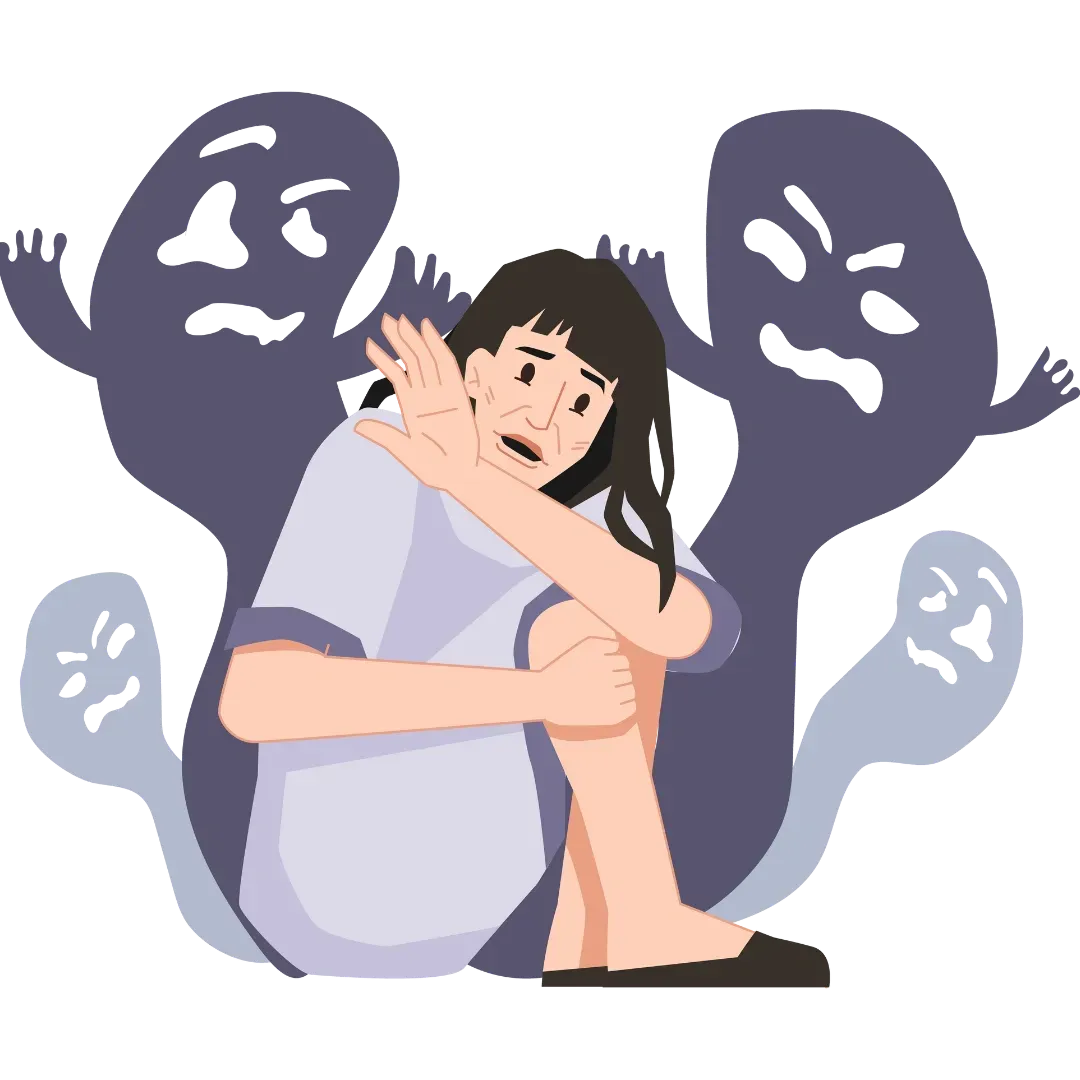
What is depression? Definition, types & how it shows up
Depression, in plain language.
Depression isn't simply sadness. It's a persistent shift in mood, energy, and outlook that can dull the things that used to feel meaningful — work, relationships, hobbies, even sleep and appetite. For some people it arrives in episodes; for others it sits quietly in the background for years.
Clinically, depression is one of the most studied and most treatable mental health conditions. There is no single cause: it's typically a mix of biology, life experience, current stressors, and the patterns we've inherited or built. Therapy meets you in that mix — not to bypass it, but to help you understand which threads are pulling on you, and which can be loosened.
Whether this is your first time seeking support or your fifth, you don't need to arrive with the right words. You just need to want something to shift.
Depression symptoms: signs to look for in mood, body & behaviour
How depression shows up.
Depression can be loud or it can be quiet. Often, the people closest to someone living with depression don't see it — and the person themselves has stopped trusting their own read of how they're doing. A few of the more common signs:
- Persistent low mood Sadness, emptiness, or numbness most of the day, most days, lasting two weeks or longer.
- Loss of interest Activities, people, and small pleasures that used to bring relief don't land anymore.
- Energy + sleep changes Sleeping much more or much less than usual; waking up exhausted; little energy for normal tasks.
- Appetite + weight shifts Significant changes in eating patterns or body weight without intending to.
- Difficulty concentrating Decisions feel harder; reading, work, or following a conversation feels foggy.
- Feelings of guilt or worthlessness A self-critical inner voice that gets harsher and more constant.
- Physical heaviness Body aches, slowed movement, or a sense of moving through something thick.
- Thoughts of self-harm or hopelessness If this is present, please call 9-8-8 or visit your nearest emergency department.
Major depression, persistent depressive disorder, postpartum & seasonal
Different shapes of depression.
Clinicians break depression into several recognized patterns. Most people don't fit cleanly into one — but knowing the shape can help target the work. Across all of them, depression tends to distort thinking in the same few ways — here's how therapy breaks the negative thinking patterns depression runs on.
- Major Depressive Disorder (MDD) The most common form — distinct episodes of depressed mood, low energy, and loss of interest lasting two weeks or longer. Episodes can recur.
- Persistent Depressive Disorder (Dysthymia) A lower-grade but longer-lasting depression — mild to moderate symptoms persisting two years or more. Often hides in plain sight; people don't always recognize they've been depressed for that long.
- Postpartum Depression Depression in the weeks or months after giving birth — distinct from the typical "baby blues." Often involves intense guilt, intrusive thoughts, and difficulty bonding. Treatable, common, and not a parenting failure.
- Seasonal Affective Disorder (SAD) Depression that shows up in fall and winter (or, less commonly, spring and summer) and lifts when the season turns. Linked to light exposure and circadian rhythm; light therapy can help alongside psychotherapy.
- High-Functioning Depression Not an official diagnosis but a real pattern — meeting work, family, and social obligations on the outside while experiencing significant emptiness, exhaustion, and low mood internally. Often undiagnosed because nothing visible is falling apart.
- Depression with Anxiety The two often travel together. About half of people with depression also experience an anxiety disorder. Treatment usually addresses both at once.
What causes depression? Common triggers & risk factors
Where it comes from.
There's rarely a single cause. Depression usually develops at the intersection of biology, history, and current circumstance. Knowing your specific mix helps target what to work on.
- Genetic predisposition Depression runs in families. Having a close relative with depression roughly doubles your risk — though genetics is influence, not destiny.
- Brain chemistry & neurobiology Differences in how neurotransmitters (serotonin, norepinephrine, dopamine) function are part of the picture, though the older "chemical imbalance" framing oversimplifies what's actually a complex interaction.
- Hormonal shifts Postpartum, perimenopause, thyroid issues, chronic illness — endocrine changes can trigger or amplify depression. Worth a check-in with your family doctor in parallel with therapy.
- Chronic stress & trauma history Long stretches of unrelenting stress, especially without recovery time, deplete the systems that keep mood steady. Past trauma can rewire how you process loss, conflict, and connection.
- Major life transitions Loss, divorce, job change, immigration, becoming a parent, retirement — transitions that disrupt identity and routine are common triggers. Often the depression isn't about the transition itself; it's about what hasn't yet replaced what's gone.
- Sleep, isolation, and substance patterns Chronic sleep deprivation, social isolation, and heavy alcohol or substance use are often part of the loop. The relief is real and short; the loop is real and long.
Depression treatment: how therapy helps (CBT, ACT, IFS)
Why work with a therapist.
There is no single right path through depression — but the consistent finding across decades of research is that the therapeutic relationship itself does meaningful work. A few of the things therapy can offer:
- 01
A safe place to say what's actually going on
For many people, the first relief comes from saying the hardest things out loud to a person trained to receive them without judgement, advice, or panic.
- 02
Evidence-based skill building (CBT, ACT, IFS)
Approaches like CBT, ACT, mindfulness-based therapy, and parts work each have strong evidence for depression. The work is figuring out which combination fits how you're wired.
- 03
Pattern recognition over time
Depression often hides its triggers in plain sight. A weekly hour spent reflecting on the past few days helps surface the small recurring shifts that move the needle — for better and worse.
- 04
Steady scaffolding when motivation drops
On the weeks when getting out of bed is the only ask you can meet, having a regular session on the calendar holds the structure for you.
- 05
Cultural fluency, not cultural translation
Our team brings deep familiarity with South Asian and multicultural family dynamics, immigrant experience, and identity work — so you're not spending your session educating your therapist.
Ready to work on this with a therapist?
Individual Therapy for depression.
Therapy for depression is delivered through our individual therapy service — in person at our Etobicoke clinic or by secure video anywhere in Ontario.
When to seek therapy for depression
Signs it's time to get support.
Everyone has hard stretches. The line between "normal" and "worth getting help for" is more about pattern and impact than intensity. Consider therapy if any of the following has been true for two weeks or more:
- Low mood or loss of interest most days Most of the day, most days, for two weeks or longer — even if you can't point to a specific trigger.
- It's affecting work, sleep, or relationships Missing deadlines, sleeping much more or much less, withdrawing from people you love, or going through the motions in your own life.
- The strategies that used to work, don't anymore Exercise, sleep, time with friends — the usual reset doesn't reset things this time.
- Family or friends have noticed Often the people around us see it before we do. If someone you trust has gently said something, that's worth taking seriously.
- You're using substances to manage it Alcohol, weed, or other substances to take the edge off — especially more than usual.
- Thoughts of self-harm or hopelessness If this is present, please reach out to a crisis line (9-8-8 in Canada) or go to your nearest emergency department. Therapy is for ongoing work — not a substitute for emergency care.
For practical tools you can try before or alongside therapy, our blog has a few starting points: summertime sadness (when summer feels heavier), journaling prompts for low mood, and CBT vs DBT (which approach fits when).
Depression FAQ: common questions answered
What people ask first.
What is depression, exactly?
Depression is a persistent shift in mood, energy, motivation, and outlook lasting two weeks or longer. Clinically it's distinct from sadness or a hard week — depression dulls the things that used to bring relief, affects sleep and appetite, and tends to have a slowed or heavy quality. It's one of the most studied and most treatable mental health conditions.
What causes depression?
There's rarely a single cause. Depression usually develops from a mix of factors: genetic predisposition (it runs in families), brain chemistry, hormonal shifts (postpartum, perimenopause, thyroid), chronic stress, trauma history, sleep and substance patterns, isolation, and major life transitions. For most people it's the combination, not any single trigger, that tips into clinical depression.
What's the difference between depression and sadness?
Sadness is a normal, time-limited response to something specific — a loss, a disappointment, a hard stretch. It usually lifts as the situation shifts. Depression is more persistent (two weeks or longer), affects mood across most domains of life (not just one situation), and comes with physical signs like sleep, appetite, and energy changes. Depression often persists even when life circumstances improve.
What is high-functioning depression?
High-functioning depression isn't an official diagnosis but it describes a real and common pattern: someone meeting work, family, and social obligations on the outside while experiencing significant low mood, exhaustion, and emptiness internally. It often goes undiagnosed because nothing visible is falling apart. The cost is usually paid privately — in sleep, energy, intimacy, and the slow erosion of meaning.
Is depression curable?
"Cured" isn't quite the right word for most cases. Depression often comes in episodes — many people experience one or two in a lifetime and recover fully; others have a recurring pattern. With evidence-based therapy (and medication where appropriate), the great majority of people see significant improvement in symptoms, function, and quality of life. The goal is recovery, not perfection.
Does therapy actually help with depression?
Yes — psychotherapy has decades of strong outcome research for depression, comparable to medication for mild-to-moderate cases and most effective when combined with medication for severe cases. The fit between you and your therapist is the single biggest predictor of whether the work helps, which is why we offer a free 15-minute consultation before you commit.
What therapy approach do you use for depression?
We're integrative. The most common evidence-based approaches we draw from are CBT (cognitive behavioural therapy), ACT (acceptance and commitment therapy), mindfulness-based cognitive therapy, and parts work / IFS. The blend depends on what's actually pulling on you — symptoms, history, and what's worked or not worked before.
Will therapy alone work, or do I need medication?
For mild-to-moderate depression, therapy alone often works well. For moderate-to-severe depression, the combination of therapy plus medication has the strongest outcomes in research. We don't prescribe — that's a physician's role — but we can coordinate with your family doctor or a psychiatrist if that conversation makes sense.
How long does depression therapy take?
Most clients work with us for several months. Some come in for a focused 8–12 weeks around a specific episode; others stay for a year or more. We re-evaluate together every few months, and you're never locked in. For depression with longer history, expect longer work.
Do I need a referral or a diagnosis to start?
No referral, no diagnosis required. You can book a consultation directly. If you'd like a formal assessment for insurance or other reasons, that can be part of the early sessions.
Can I do depression therapy online?
Yes. We offer PHIPA-compliant video sessions across Ontario. Many clients find virtual sessions easier on weeks when leaving the house feels heavy.
Is depression therapy covered by OHIP?
No. Psychotherapy provided by Registered Psychotherapists (RP) and Registered Social Workers (RSW) isn't covered by OHIP. It is, however, covered by most extended health benefit plans — look for psychotherapist, registered social worker, or mental health coverage in your benefits booklet.
What if I'm in crisis right now?
If you're in immediate danger, please call 9-1-1 or go to the nearest emergency department. For 24/7 support, call or text 9-8-8 (Canada's suicide crisis helpline). Therapy is most useful for ongoing work — it's not a substitute for emergency care.
Depression help & free resources in Canada
External support to lean on.
-
9-8-8 Suicide Crisis Helpline
If you or someone you know is in crisis, call or text 9-8-8. Available across Canada, 24/7, in English and French.
-
Wellness Together Canada
Free, government-funded mental health support for people in Canada — includes 24/7 phone counselling and online resources.
-
CAMH — Centre for Addiction and Mental Health
Canada's leading mental health teaching hospital. Their depression resource page is plain-language and clinically reviewed.
-
ConnexOntario
Free, confidential 24/7 information line for mental health, addictions, and problem gambling support across Ontario. Call 1-866-531-2600.
Related conditions therapy helps with
Other things therapy helps with.
Ready when you are
Take the first step toward feeling like yourself again.
Book a free 15-minute consultation. No paperwork, no commitment — just a conversation about what you're going through and whether we're a fit.