 Skip to main content
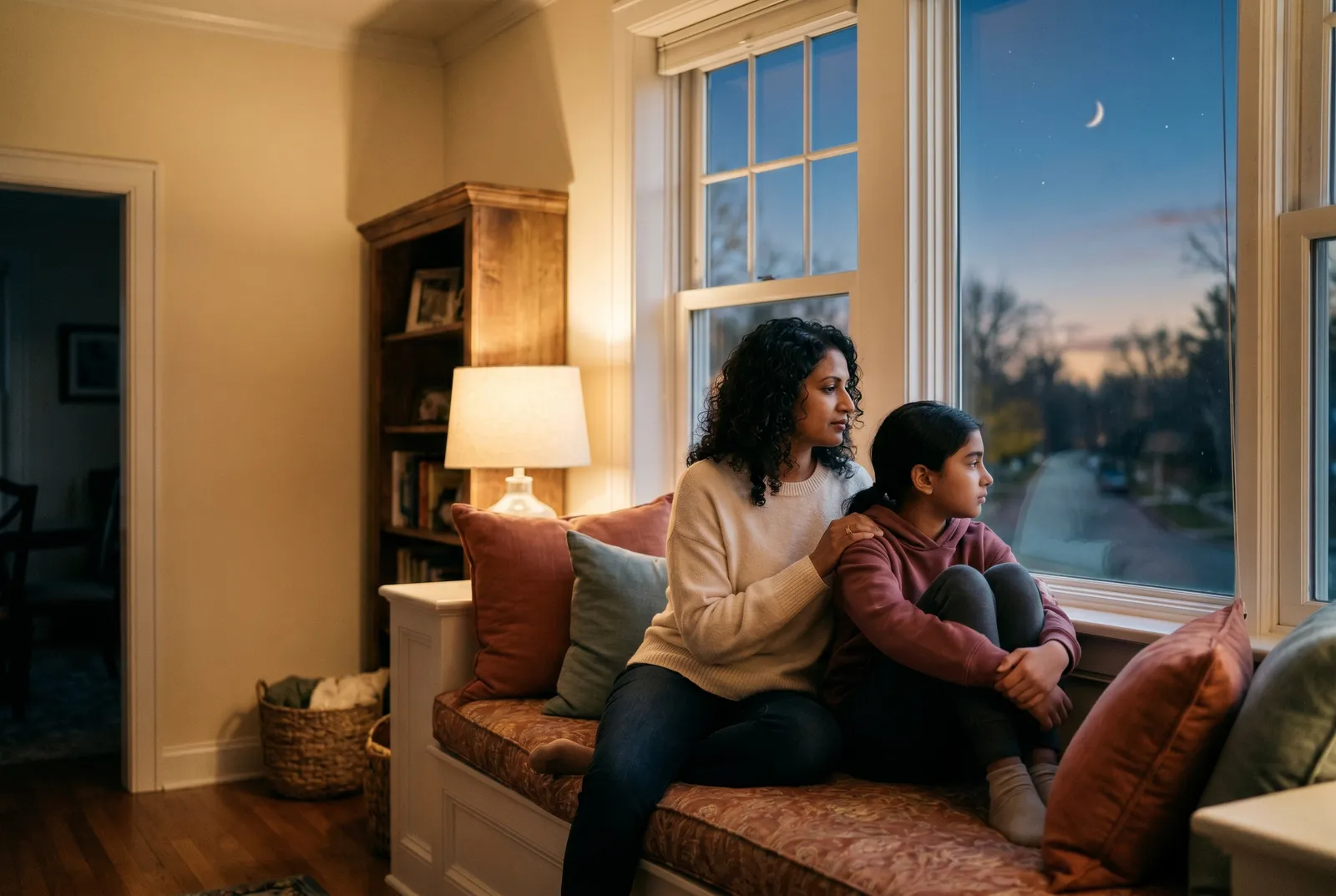
Children have hard weeks. They get clingy, they melt down, they go quiet, they push back. Most of it is ordinary — the work of growing up — and it passes. So the question almost no parenting article answers cleanly is the one you actually have: how do you tell an ordinary hard stretch from something worth a professional’s attention?
This is a working guide to that line: what tends to be developmentally normal, what’s worth acting on, and what therapy for a child actually involves.
How do you tell a rough patch from something more?
Three questions cut through most of the uncertainty: how long it has lasted, how intense it is, and whether it’s getting in the way. A bad week is a bad week. A mood, behaviour, or worry that holds for weeks, runs hotter than the trigger warrants, and disrupts school, sleep, or friendships is a different thing.
- Duration. A rough patch passes. A pattern that holds for several weeks or more is worth noticing.
- Intensity. Is the reaction proportionate to the trigger, or noticeably bigger?
- Impairment. Is it interfering with daily life? That’s the clearest signal of all.
One hard month after a move or a loss is expected. The same pattern with no obvious cause, or one that keeps widening, is worth a closer look.
Signs worth paying attention to
No single sign means “book therapy now” — it’s the pattern that matters. These are the ones worth taking seriously:
Anxiety that shrinks their world.
Every child worries. Worry that makes them avoid school, activities, or friends — that narrows what they're willing to do — is different. Anxiety left alone tends to spread, not settle.
A weeks-long shift in mood.
Irritability, sadness, withdrawal, or anger that lasts and doesn't track to an obvious cause. Not a bad day — a change in who they've been, holding for a month or more.
School that suddenly isn't working.
A drop in grades, refusing to go, stomachaches every morning before the bell, or a teacher flagging behaviour. School problems are often emotional problems wearing a uniform.
Pulling away from other kids.
This isn't shyness — shyness is steady. A child who used to have friends and now avoids them, or who can't seem to make them, is telling you something.
Outbursts that seem too big.
Meltdowns far out of proportion to the trigger, or a real struggle to come back down afterwards. It often points to a child who doesn't yet have the tools to manage big feelings.
Changes in sleep or appetite.
Trouble falling asleep, nightmares, eating much more or much less. Stress and low mood show up in the body — especially in kids who don't yet have words for what they feel.
After something hard.
A loss, a divorce, an accident, bullying. A child can be affected even when they look fine — sometimes especially then. Support helps them process it rather than carry it.
When your gut says something’s off
Parents notice things before they can name them. If you have a quiet, persistent sense that something isn’t right — even without a tidy list of symptoms — that is a valid reason to ask. You don’t need to wait for a crisis to justify a conversation. Mental-health difficulties also tend to take root early; CAMH notes that half of all mental illness begins by age 14, and getting support sooner is usually the shorter, easier path than waiting it out.
What does therapy look like for a child?
It isn’t a small adult on a couch being asked how they feel. A good therapist works at the child’s level — conversation alongside age-appropriate activities, structure that feels safe, and goals that fit where they are. And parents aren’t shut out: you’re usually looped in so the work continues at home.
Clear Moon Therapy works with children aged 10 and up. Children’s therapy is in-person in Etobicoke or online across Ontario. For a child this age, sessions lean on talk and skill-building, with the parent kept part of the process.
How do you bring it up with your child?
Frame it as support, not correction — and keep it simple. You don’t need a perfect script:
- Call it support, not a consequence. Therapy is a place to talk and learn skills — not somewhere you’re sent for being “bad.”
- Be honest and plain: “Things have felt hard lately, and this is someone whose job is helping kids with exactly that.”
- Hand them some control. Let them know they choose what they share, and can ask the therapist anything.
- Normalize it. Plenty of kids do this. It can be as ordinary as seeing a doctor when something hurts.
If they’re hesitant, that’s normal. A good first session is low-pressure by design.
Most childhood difficulty resolves on its own. Some doesn’t, and the cost of waiting is usually higher than the cost of asking early. If the patterns here sound familiar, or your instinct has been nudging you, that’s reason enough to have a conversation.
Clear Moon Therapy offers a free 20-minute consultation for children’s therapy — a chance to talk it through with a therapist before anything is decided. Book a consult; we reply in 24–48 hours, and there’s no waitlist.
What else do parents ask?
Is it normal for a child to need therapy?
Yes. Plenty of children see a therapist at some point — after a hard transition, a loss, or simply a stretch where their feelings outpaced their tools. It isn't a verdict on your parenting or on your child. Early support tends to build coping skills that hold up long after the sessions end.
Will my child be "labelled" if they see a therapist?
No. Therapy with a child is confidential, and the goal is support — helping them understand and manage what they're feeling — not collecting a diagnosis for its own sake. Sessions are a private space, not a permanent record that follows them.
How long does children's therapy take?
It depends on the child and the goals. Some children show meaningful change within a few months; others benefit from longer-term support, especially after trauma or a major life change. A therapist can give you a clearer sense of the arc after the first few sessions.
My child is under 10 — can they still come to Clear Moon Therapy?
Clear Moon Therapy's children's therapy is for ages 10 and up. For younger children, your family doctor or a practice that specializes in early-childhood mental health can point you toward the right fit — and the signs above are still worth acting on whatever your child's age.